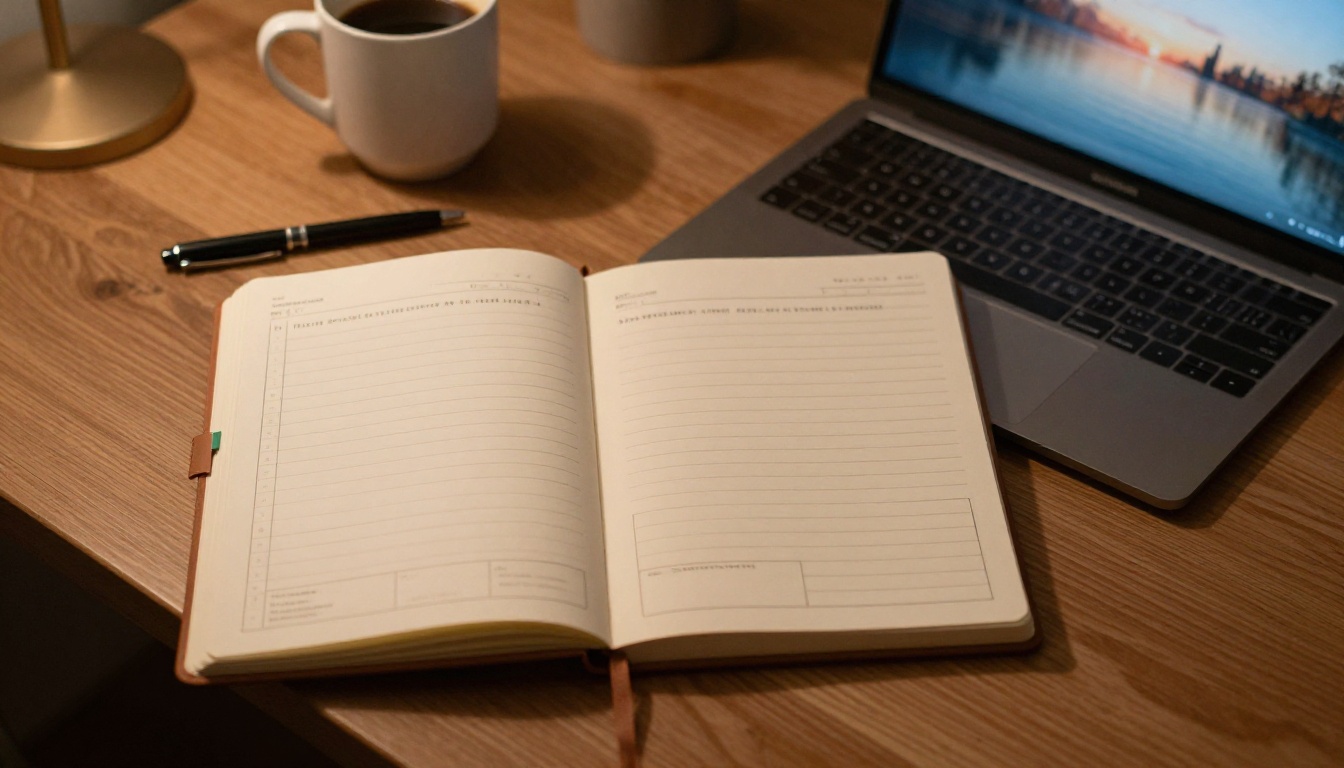
Picture this. You sit at your desk the night before a big exam. Notes scatter everywhere. Your brain feels foggy. You’ve read them three times, but nothing sticks.
Cornell Notes fix that. This system splits your page into sections that turn passive reading into active quizzing. You create questions on the fly. Then test yourself fast. It boosts recall and makes studying feel less like a chore.
In the steps ahead, you’ll learn the layout basics. Then a simple five-step quiz routine. Plus hacks and pitfalls to avoid. Anyone can do this right before an exam. Let’s set you up to ace it.
Master the Cornell Notes Layout for Easy Quizzing
Cornell Notes divide a standard page into three key areas. A narrow cue column runs down the left side. The wide notes section fills the right. A summary box sits at the bottom. This setup makes self-quizzing automatic. No need for separate flashcards.
Take a history class on World War II. In the cue column, jot “Causes of WWII?” The notes column lists main points like economic depression and treaty resentment. The summary ties it together. Now your page becomes a quiz tool. You cover notes and test recall. Active review like this sticks better than rereading.
Here’s a simple sketch of the layout:
+-------------------+-----------------------+
| Cue Column        | Notes Column          |
| (2-3 inches wide) | (most of the page)    |
|                   |                       |
| What?             | - Bullet points here  |
| Why?              | - Key details         |
| Examples?         | - Short phrases       |
+-------------------+-----------------------+
| Summary (full width, 2 inches high)                 |
| Quick overview in your own words.                   |
This format saves time. It forces focus during class. Later, quizzing flows naturally.
Cue Column: Your Quiz Questions Ready to Go
Fill the cue column right after class or that night. Turn big ideas into questions. Start with “What are…?” or “Why does…?” Keep them short.
For science, write “Define photosynthesis?” In math, try “Steps for solving quadratics?” Or “List Newton’s laws?” These prompts pull answers from memory.
Because questions mimic exam style, they build confidence. You glance left and quiz yourself. No flipping pages. This habit turns notes into a personal test bank.
Notes Column: Keep It Clear and Answer-Focused
Use the notes area for details that match your cues. Stick to bullets and phrases. Skip full sentences to save space.
For “Photosynthesis steps?”, note: “Light energy. CO2 + H2O. Makes glucose + O2.” Clean lists make checking easy. Avoid verbatim copies from slides. Paraphrase instead.
Short notes speed up quizzes. You uncover, scan, and verify fast. Clutter slows you down. Clear entries mean quick wins.
Summary Box: Tie It All Together for Review
After notes, write two or three sentences at the bottom. Rephrase the page’s main points. For WWII causes: “Depression fueled unrest. Versailles Treaty bred anger. Leaders exploited nationalism.”
This step cements knowledge. During quizzes, read it first for context. It acts as a memory jogger. Plus, rewriting boosts understanding. One glance reminds you of the big picture.
The Simple 5-Step Routine to Self-Quiz Like a Pro
Self-quizzing with Cornell shines in its routine. Follow these five steps. They use active recall and spaced repetition. Your brain strengthens paths to answers over time.
- Cover the notes column. Fold the page or use scrap paper.
- Read one cue. Say the answer aloud or jot it briefly.
- Uncover notes. Check if you nailed it.
- Star misses for later review.
- Repeat the page later that day or next session.
Set a timer for 20-30 minutes. Short bursts keep focus sharp. This method beats passive highlighting. You retrieve info, not just recognize it.
Students who quiz this way score higher. Because recall mimics tests, it cuts anxiety. Practice feels like the real thing.
Handle Mistakes Without Getting Discouraged
Wrong answers happen. Don’t stress. Rewrite the correct version in the margin. Next quiz, hit starred cues first.
Track stars over days. Fewer each time shows progress. This targets weak spots. Turn them into strengths before exam day.
Focus builds resilience. You see improvement fast. That motivates more sessions.
Time It Right for Exam Week Success
Quiz daily for 20 minutes. Review full pages the night before. Pair it with good sleep. Your brain consolidates during rest.
Active recall works because it forces effort. Studies show it doubles retention over rereading. Space sessions for lasting memory. One week out, start light. Ramp up closer in.
Busy schedule? Fit it in mornings. Consistency trumps cramming.
Boost Results with These Quick Cornell Quizzing Hacks
Make quizzes stick harder with these tips. They add variety without extra work.
Color-code cues by topic. Blue for history dates. Green for science processes. Colors cue memory faster.
Quiz a buddy. Swap pages. They read your cues. You answer theirs. Explaining solidifies your grasp.
Add quick sketches in notes. Draw a cell for biology. Visuals aid recall, especially for diagrams.
Prefer digital? Scan pages into apps like Notability. But paper cuts distractions best. Test both.
Mix cue types. Add “True or false: WWII started in 1939?” These sharpen critical thinking.
Each hack fits seamlessly. Pick one or two. Retention jumps because you engage different senses.
Common Pitfalls and How to Dodge Them
Many skip cues. Pages stay blank on the left. Fix it by filling during review. Set a five-minute timer post-class.
Messy notes blur answers. Use bullets only. Practice on scrap paper first.
Ignore summaries? Knowledge stays shallow. Force the two-sentence rule every time.
Quiz by peeking early. Cover fully from the start. Build the recall muscle.
Dodge these, and grades rise. Most see jumps after one week. Simple tweaks pay off big.
Cornell Notes turn studying into smart quizzing. You quiz effortlessly and retain more. Exams feel conquerable.
Try it on one subject this week. Grab your notebook now. Fold that page and start. Your top grade waits.